Soup Is Not Just a Japanese Trend: The Ancient Science of Liquid Foods in Ayurveda


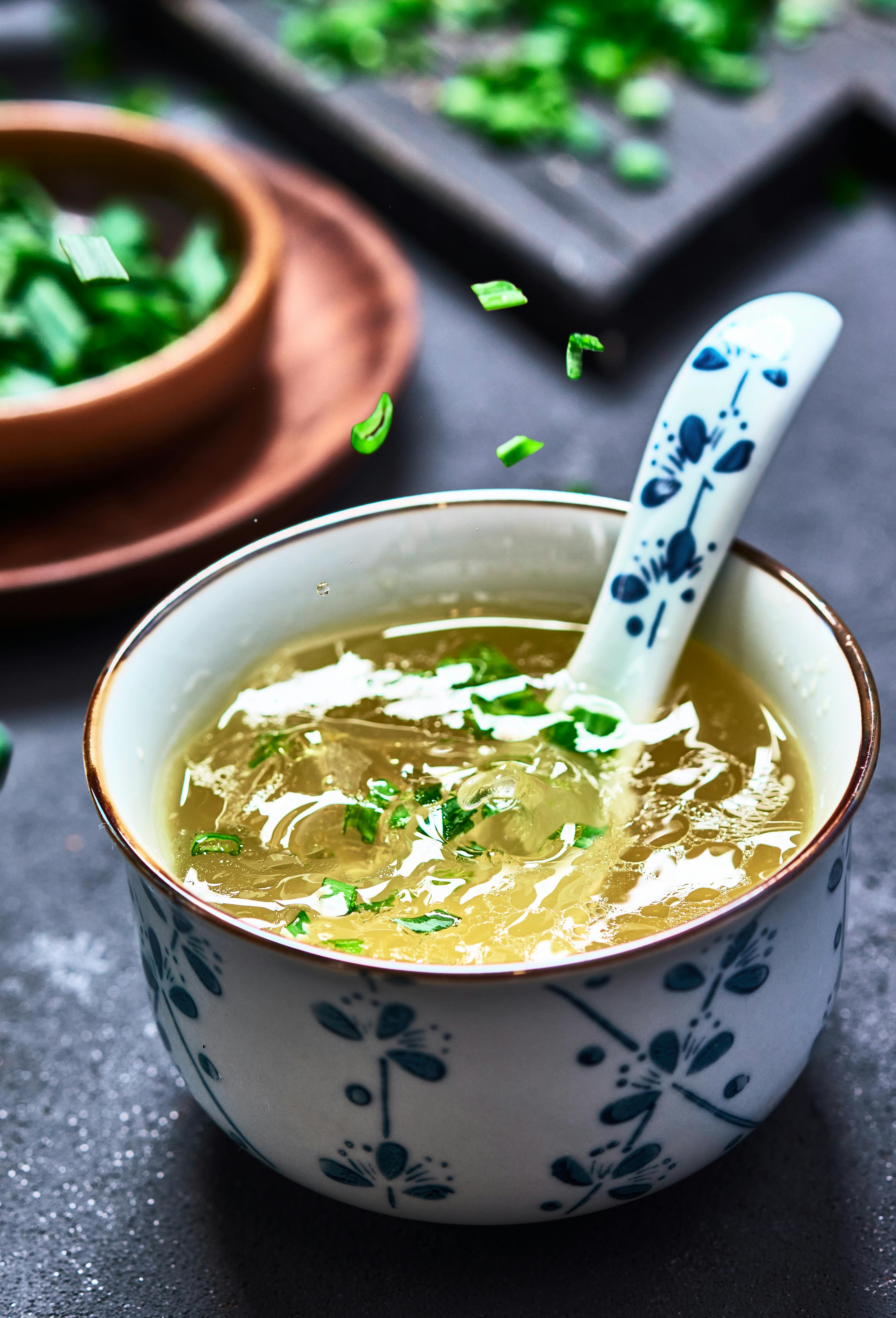
Today, soups and broths are frequently celebrated as vital elements of Japanese culinary culture—associated worldwide with mindfulness, digestive ease, and graceful ageing. Miso soup is perhaps the most familiar contemporary symbol. Yet the concept of consuming meticulously engineered liquid and semi-liquid meals is certainly not new to India.
Classical Ayurveda describes an exceptionally sophisticated and systematic range of such preparations. Rather than casually bundling every warm broth under the generic umbrella of "soup," classical treatises distinguish preparations according to their base ingredients, water-to-grain ratio, cooking method, amount of solid grain retained, viscosity, metabolic lightness (Laghu), and exact clinical or dietary intention.
Among these classical formulations are Maṇḍa, Peyā, Vilepī, Yūṣa, and Māṃsarasa.
Maṇḍa, Peyā and Vilepī: Not the Same Preparation
An instructive classification preserved in the Suśruta Saṃhitā (Sūtrasthāna) clearly delineates these preparations based on the proportion of siktha—the cooked grain portion:
सिक्थवर्जितो मण्डः पेया सिक्थसमन्विता ।
विलेपी बहुसिक्था स्याद्यवागूरविलद्रवा ॥
This classical verse provides an elegant and scientifically precise continuum based on grain solids:
Maṇḍa (मण्ड)
Siktha-varjita: The cooked solid grains are completely strained out. It is the clear, ultra-light medicinal liquid obtained from cooked grain. Extremely gentle on weakened digestion and rapid in absorption.
Peyā (पेया)
Siktha-samanvitā: Contains predominantly warm liquid accompanied by a modest presence of well-softened grains. Occupies an intermediate bridge between pure fluid and soft food.
Vilepī (विलेपी)
Bahu-sikthā: Substantially denser, retaining a generous proportion of soft, cooked grains with comparatively little free liquid. Nourishing, grounding, and steadying.
This establishes a conscious therapeutic gradient:
Maṇḍa → Peyā → Vilepī
Pure clear liquid → Liquid with light grains → Thick grain-rich soft meal
The classification is not merely subjective kitchen preference. The amount of solid matter retained fundamentally alters gastric emptying time, insulin response, and digestive workload.
Water Quantity and Cooking Methodology
Classical Ayurvedic culinary pharmaceutics also prescribed specific water ratios according to the target therapeutic outcome.
For instance, a legume-based Yūṣa is traditionally prepared with an abundant volume of water—classically described as up to sixteen times the quantity of the pulse. In contrast, grain Peyā preparations often employ lower water multiples (such as four to six parts water) depending on the desired consistency and grain density.
Ayurveda does not merely state "add water." It assesses what happens during cooking: the evaporation rate, the starch gelatinization, the bioavailability of micronutrients, and whether the final consistency serves to kindle digestion (Dīpana) or relieve dehydration.
Yūṣa: The Ayurvedic Pulse Soup
Yūṣa (यूष) is the closest classical equivalent to what modern nutrition describes as a protein-rich pulse soup or clear dal broth.
Traditionally prepared with split green gram (Mudga / Moong) or horse gram (Kulattha), Yūṣa is cooked thoroughly until the legume dissolves softly into water, delivering bioavailable amino acids without the gas-producing heaviness of raw or undercooked legumes.
Classical texts further categorize Yūṣa into two forms:
- Akṛta Yūṣa: Unseasoned pulse broth prepared purely with water and salt, without oil, ghee, or heavy tempering. Designed for acute recovery and digestive rest.
- Kṛta Yūṣa: Seasoned pulse soup gently tempered with medicated ghee (Sneha), rock salt (Saindhava), cumin, ginger, and curry leaves to stimulate sluggish appetite.
Māṃsarasa: The Ancient Meat Broth
Ayurvedic nutrition was never confined exclusively to vegetarian preparations.
Māṃsarasa (मांसरस) is a classical clear broth obtained by gently simmering meat with water and carminative spices. In modern culinary parlance, it shares similarities with artisanal bone broths or bouillon.
In classical literature, Māṃsarasa is prescribed for convalescence, muscle wasting, post-illness fatigue, postpartum recovery, and depleted vitality (Ojas). The choice of animal, tissue type, seasonal context, and patient constitution were strictly assessed before recommendation.
Ayurveda Had a Spectrum of Liquid Foods
When these preparations are considered together, a remarkably cohesive and intentional pattern emerges:
- Maṇḍa: Predominantly grain-derived clear liquid, without solid cooked grains.
- Peyā: More liquid with a small, soothing amount of cooked grain.
- Vilepī: Thicker and substantially richer in cooked grains.
- Yūṣa: Pulse-based light liquid preparation (e.g. green gram).
- Māṃsarasa: Nourishing meat-based restorative broth.
These were not merely culinary recipes. They formed an indispensable branch of classical Āhāra—food as a primary determinant of physiological recovery and health.
The texture, solid retention, and fluid viscosity of each food could be modified precisely according to the digestive capacity (Agni) and clinical requirements of the individual. This is why reducing all these distinct preparations to the generic English word “soup” substantially understates the sophistication of classical Ayurvedic dietary science.
More Than a Modern Trend
Japanese cuisine deserves sincere admiration for preserving miso soups and bone broths as integral components of everyday table culture. But nourishing liquid meals are not an imported novelty.
India possesses a two-thousand-year-old lineage of liquid dietary science. Rather than prescribing a generic "one-size-fits-all healthy soup," Ayurveda engineered distinct preparations from grains, pulses, and broths, systematically tailoring water volume, grain retention, and spices to the individual.
"It is not simply about drinking soup. It is about choosing the right ingredient, the right quantity of water, the right consistency, and the right preparation for the right person."
Long before soup culture became a global wellness buzzword, Ayurveda had already perfected the science of liquid nutrition.
RIDDHI Ayurveda Clinic, Rajkot • Traditional wisdom. Thoughtful interpretation. Individualised care.
This article is for educational purposes and does not replace individual medical consultation.
About the Authors
Dr. Vijay Telang
Dr. Minakshee Vijay Telang
Personalized Dietary Guidance
Every body metabolizes differently. At RIDDHI Ayurveda Clinic, our dietary plans are formulated around your Prakriti, current Agni, and lifestyle needs.
RIDDHI Ayurveda Clinic • Shop No. 206, Atulyam Prime, Morbi Bypass Road, Ronki, Rajkot
Mon–Sat: 6:30 PM–8:30 PM • Helpline: +91 90575 52143 / +91 87932 19610